Skip to content
RATAPANIJUNGLE SAFARI
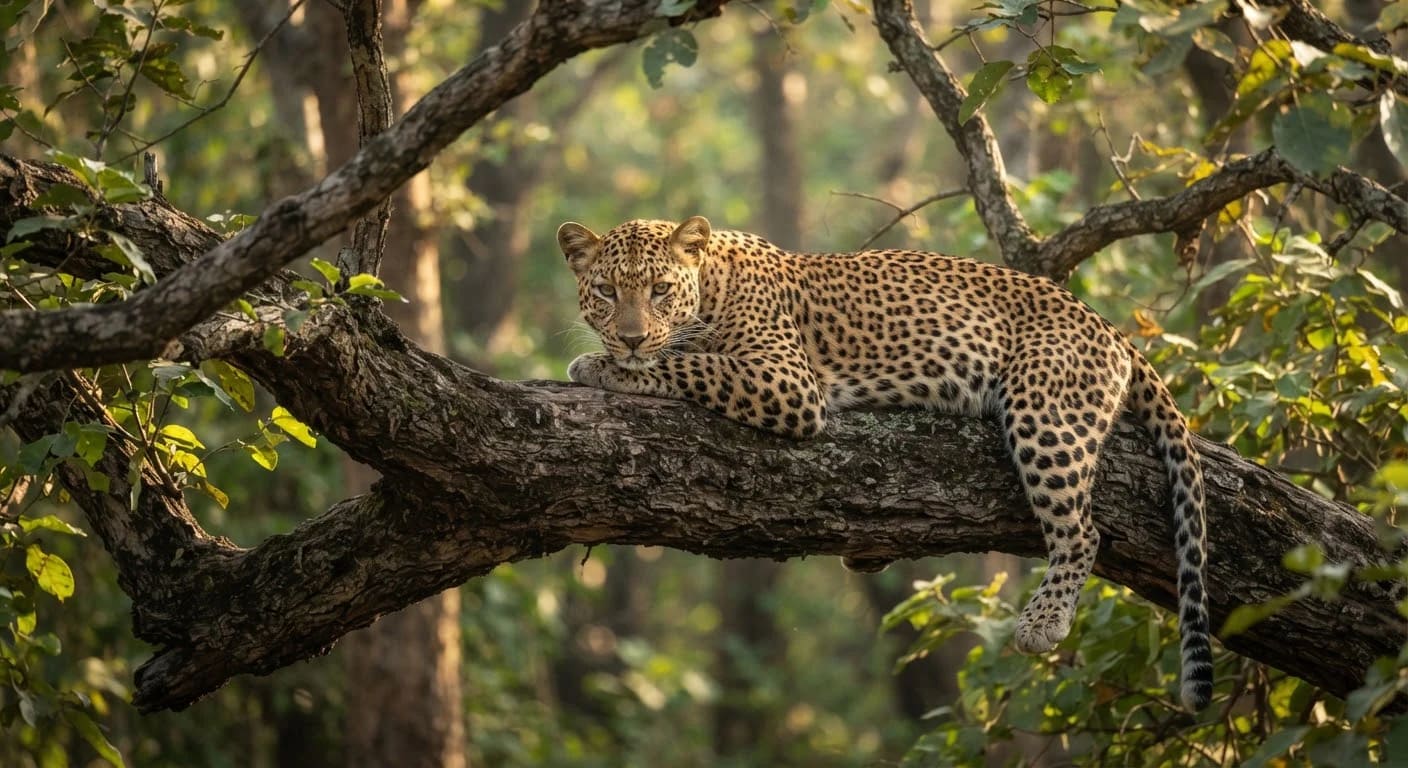
Leopard on a teak branch, Ratapani wildlife

Biodiversity dossier · Central Indian ecosystem

Ratapani Wildlife: Animals & Birds of Ratapani Tiger Reserve

Tigers in the teak valleys, leopards on the sandstone ridges, sloth bears in the bamboo and 249 kinds of birds: a field guide to the animals of Ratapani and how to spot them.

35+ mammal species249 bird speciesTiger reserve since 2024Updated
Tigers
56
2022 tiger census
Mammals
35+
species recorded
Birds
249
species recorded
Butterflies
104
species recorded
Reptiles
33
+ 10 amphibians
Wildlife dossier

Ratapani wildlife at a glance

Two big cats, one forest

Tigers hold the valleys and water; leopards keep to rocky ridges, cliffs and trees.

Sloth bears and wild dogs

Bamboo slopes and mahua groves suit sloth bears; dholes roam the quieter forest.

The prey base

Sambar, chital, nilgai and wild boar feed the predators; improving prey density is a conservation priority.

Water draws wildlife

Ratapani Dam, Barna Reservoir and stream pools concentrate animals and birds in the dry season.

Species field guide

Animals in Ratapani: 12-Species Guide

Conservation status is from the IUCN Red List. Sighting chance is general guidance for a typical safari, not a guarantee.

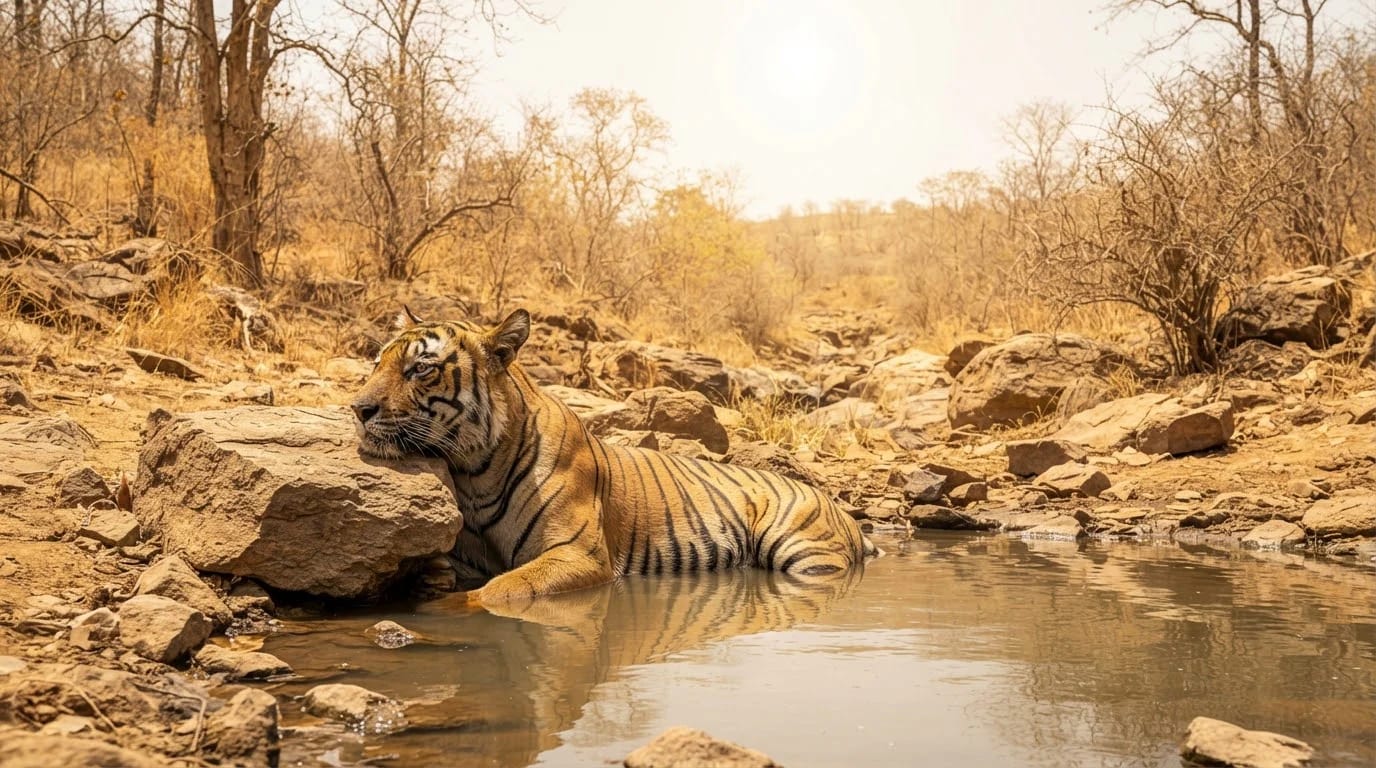
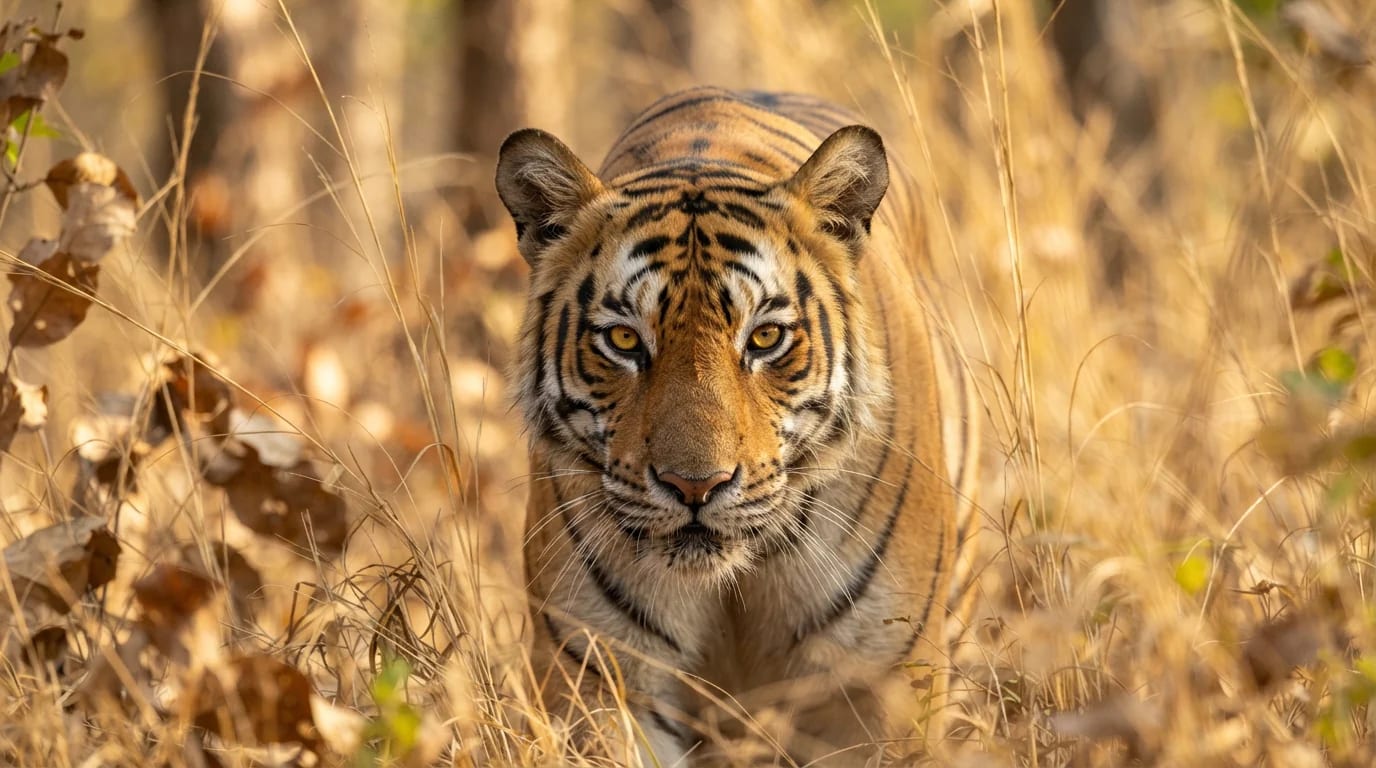
Bengal tiger in dry grass, Ratapani Tiger Reserve animalsEndangered (IUCN)Apex predator

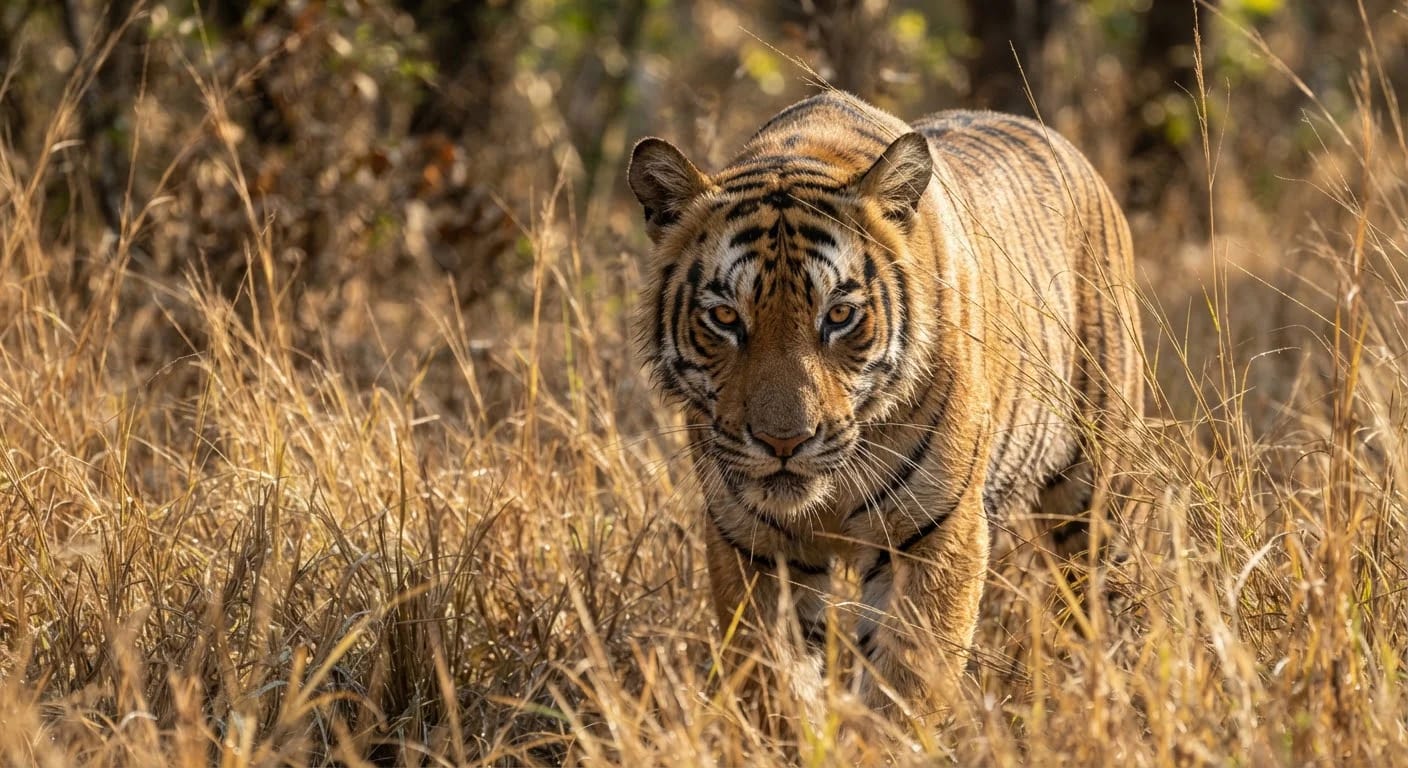
Bengal Tiger

Panthera tigris tigris

Chance of sightingModerate

Teak valleys, ravines and areas near water

Early mornings; summer waterholes

56 tigers were recorded in the 2022 census. Some range to the edge of Bhopal city, earning them the name “city tigers”.
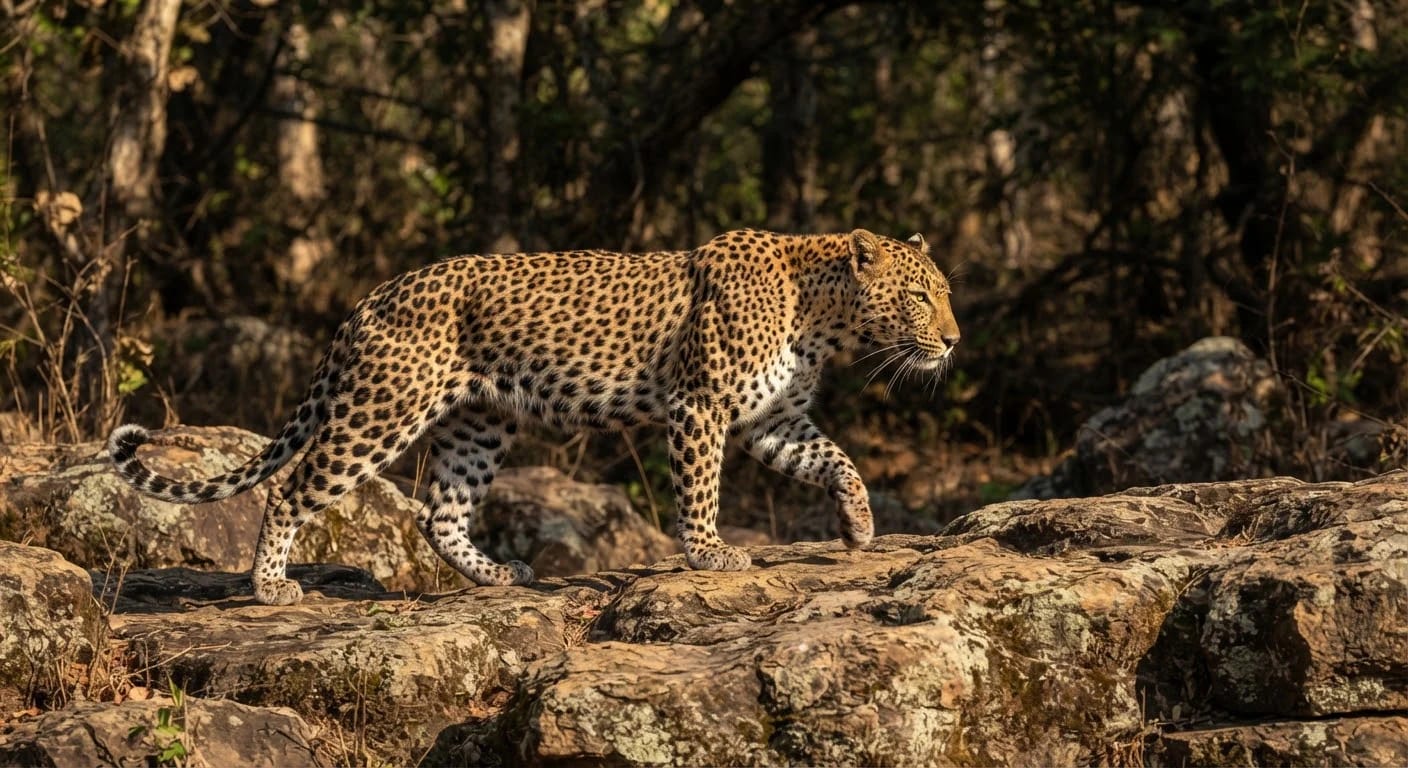
Indian leopard on sandstone boulders in RatapaniVulnerable (IUCN)Rock specialist

Indian Leopard

Panthera pardus fusca

Chance of sightingModerate

Rocky ridges, gorges and boulder country

Dawn and late evening

Shares the forest with tigers by keeping to cliffs, rock shelters and tree branches.

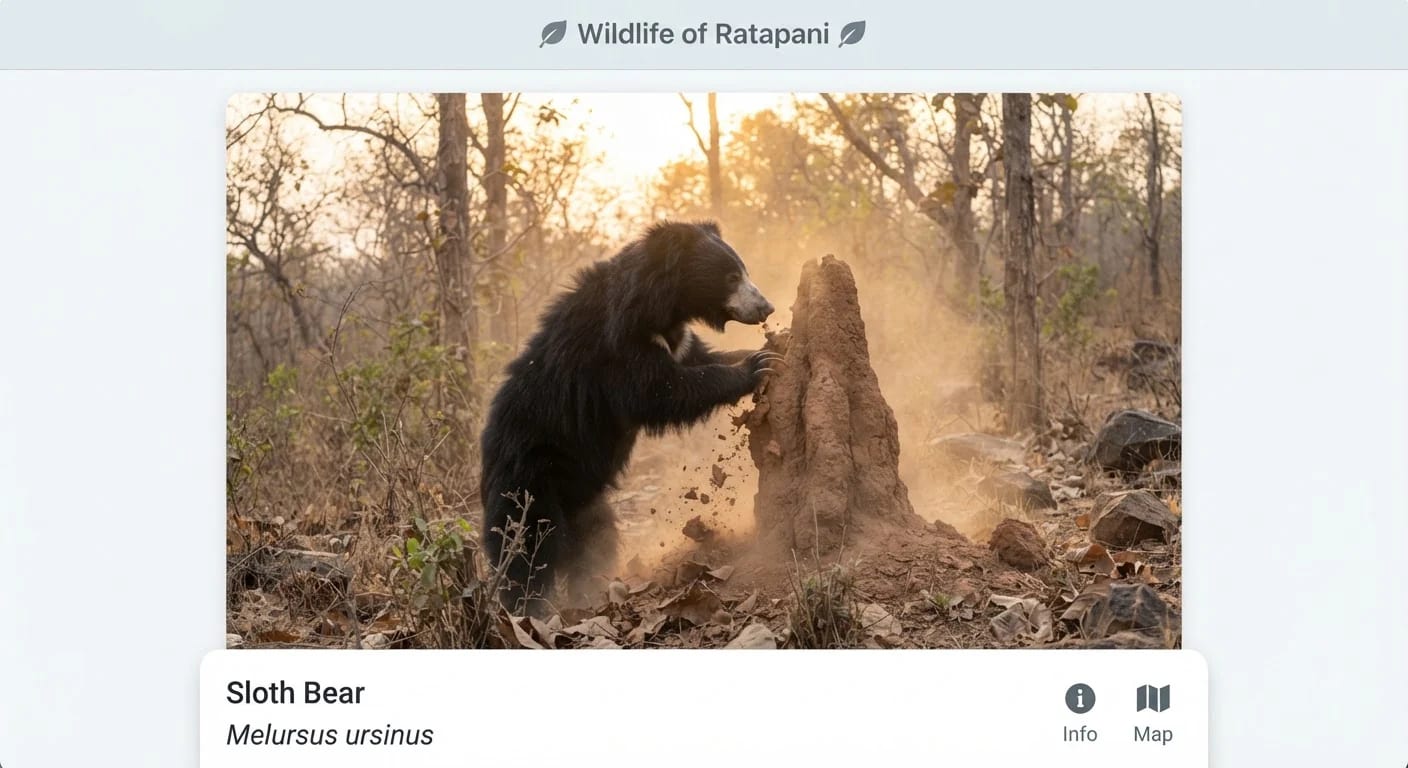
Sloth bear at a termite mound in RatapaniVulnerable (IUCN)Frequently seen

Sloth Bear

Melursus ursinus

Chance of sightingGood

Bamboo slopes, mahua groves, termite mounds

Early morning and dusk

One of the most frequently seen large mammals in Ratapani, especially in spring when mahua flowers fall.

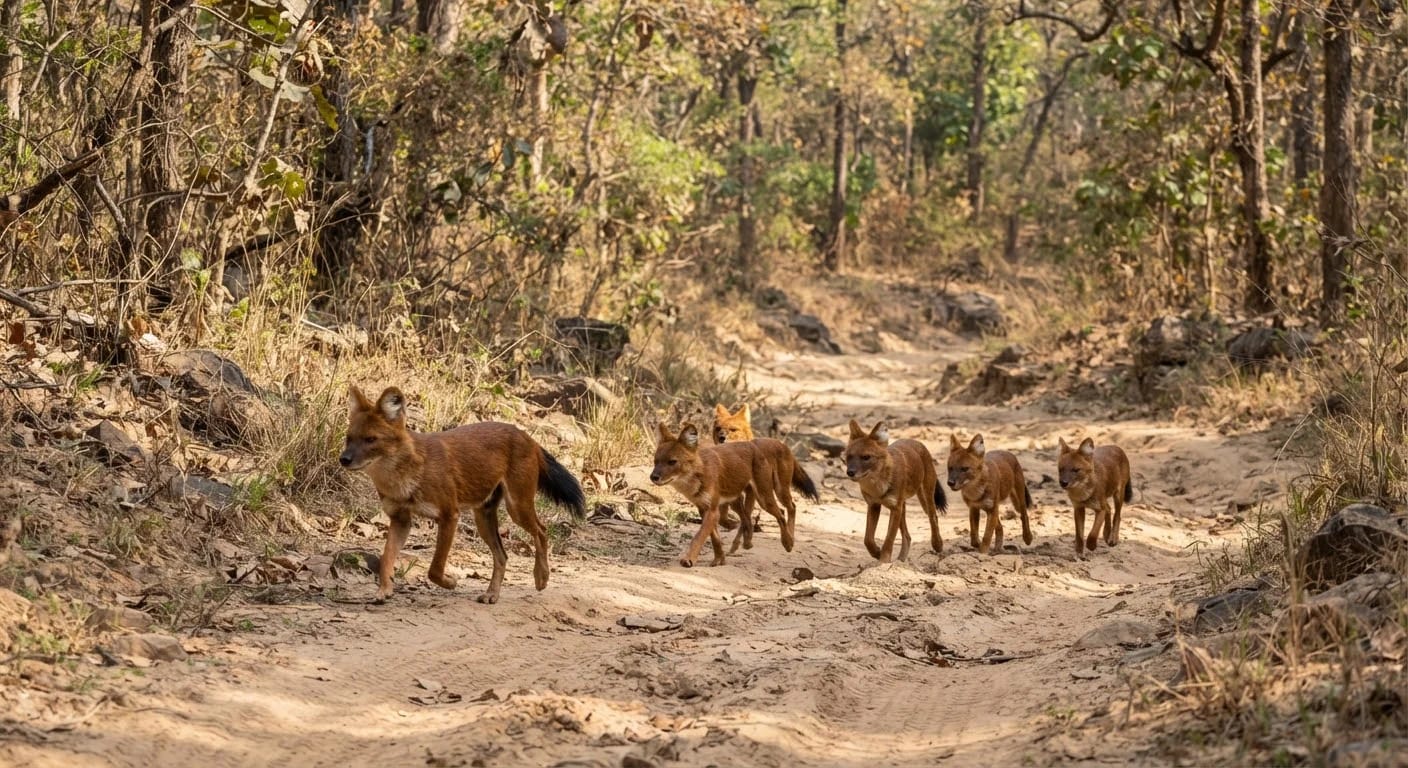
Dhole (wild dog) pack in Ratapani forestEndangered (IUCN)Pack hunter

Dhole (Asiatic Wild Dog)

Cuon alpinus

Chance of sightingRare

Undisturbed forest and riverbeds

Morning hunts

Hunts in coordinated packs and keeps in touch with high-pitched whistles.

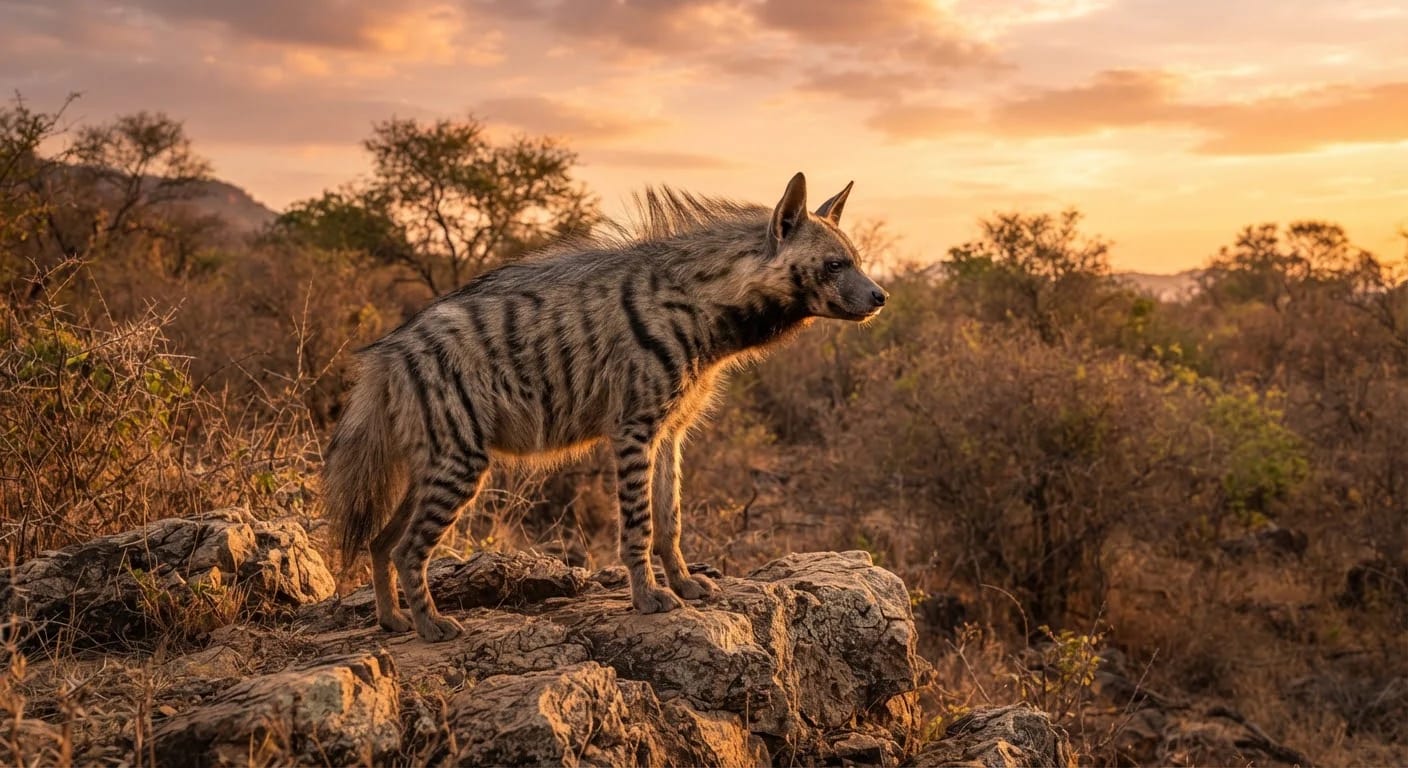
Striped hyena in Ratapani Wildlife SanctuaryNear Threatened (IUCN)Night scavenger

Striped Hyena

Hyaena hyaena

Chance of sightingRare

Rocky scrub and forest edges

Mostly at night

A shy scavenger whose powerful jaws crush bones, recycling the leftovers of predator kills.

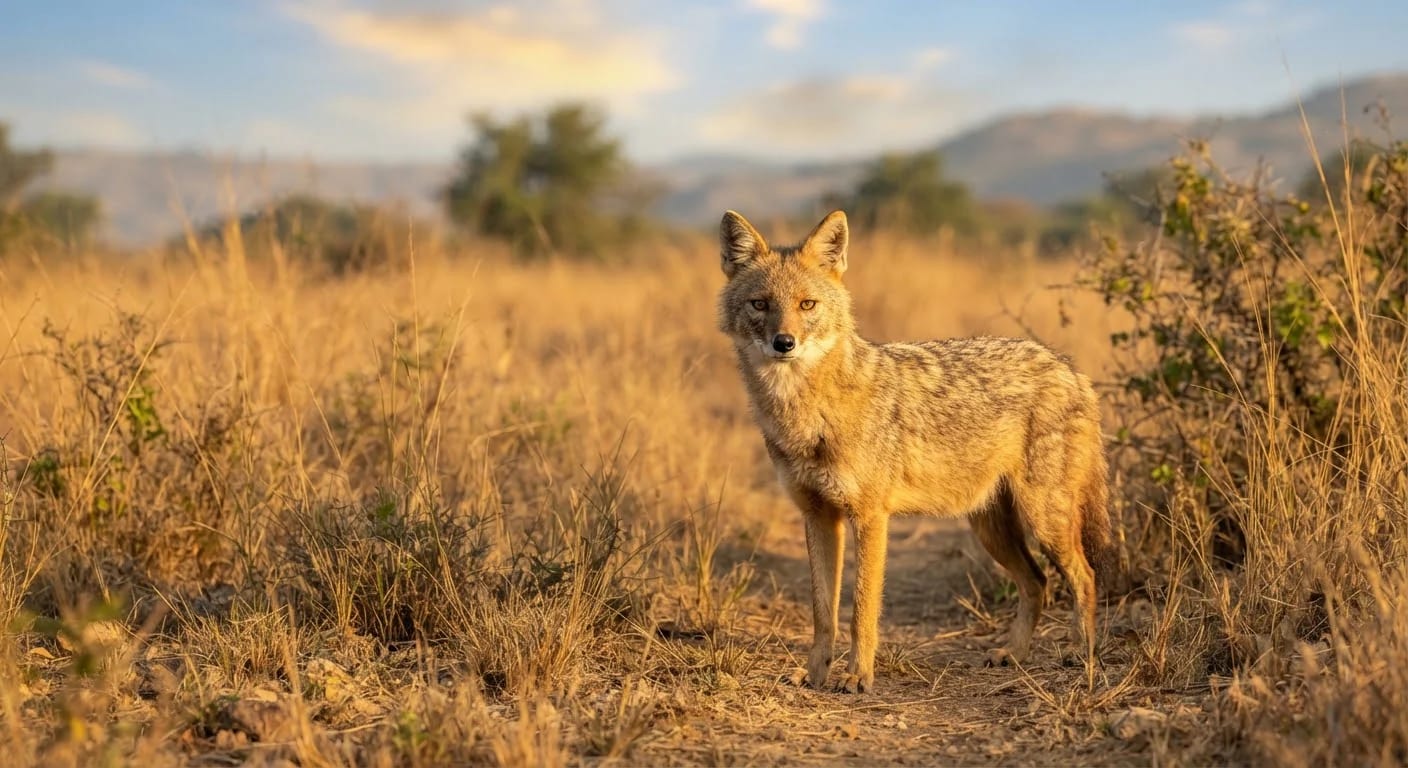
Golden jackal in Ratapani grasslandLeast Concern (IUCN)Adaptable forager

Golden Jackal

Canis aureus

Chance of sightingGood

Open patches, forest edges and roads

Dawn and dusk

Often heard calling at dusk and sometimes seen trotting along safari tracks.

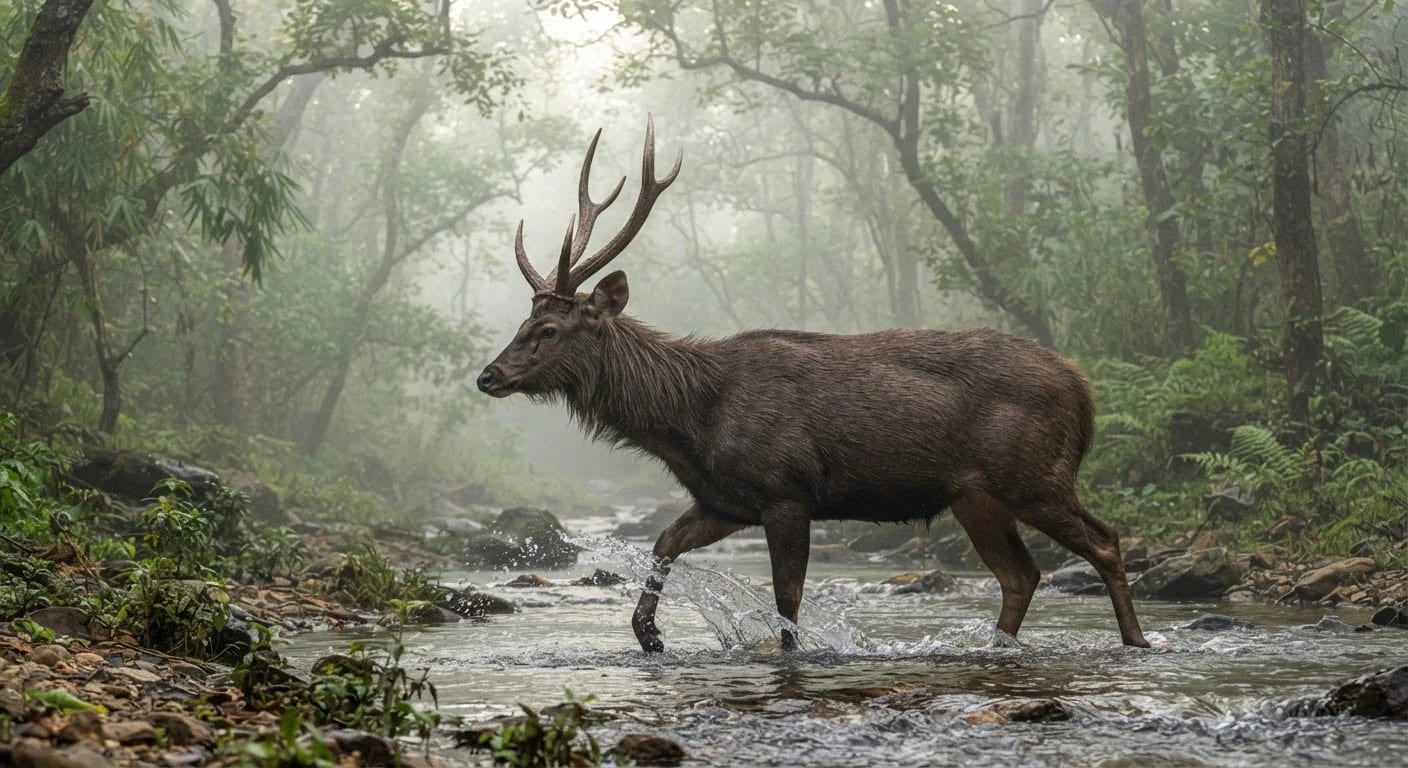
Sambar deer in a forest stream, Ratapani wildlifeVulnerable (IUCN)Largest deer

Sambar

Rusa unicolor

Chance of sightingHigh

Wooded slopes, valleys and water

Mornings and evenings near water

India’s largest deer and a key prey species; its loud alarm “bell” often signals a predator.

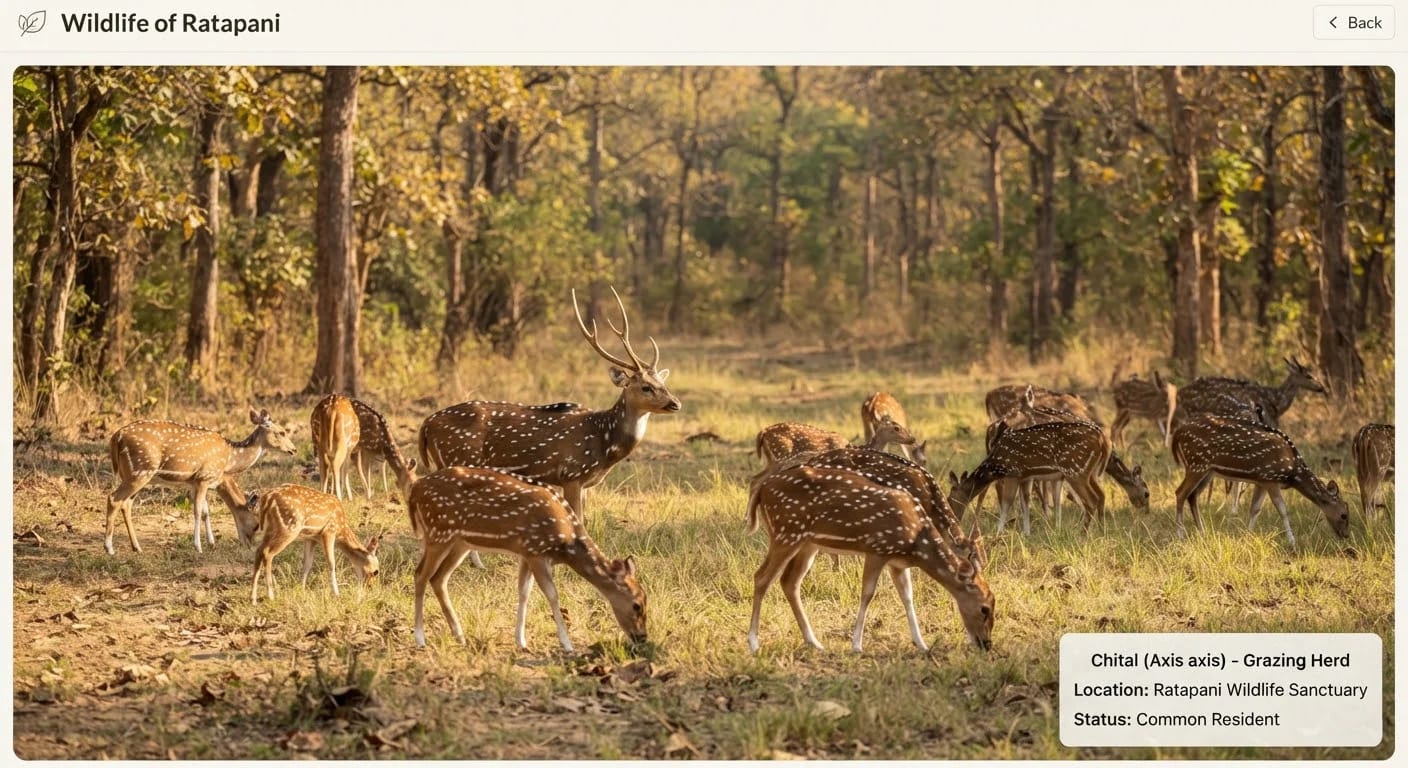
Chital herd in a Ratapani forest clearingLeast Concern (IUCN)Herd grazer

Chital (Spotted Deer)

Axis axis

Chance of sightingHigh

Forest clearings and edges

Throughout the day

The most commonly seen deer; herds often feed below langurs, which drop fruit and leaves.

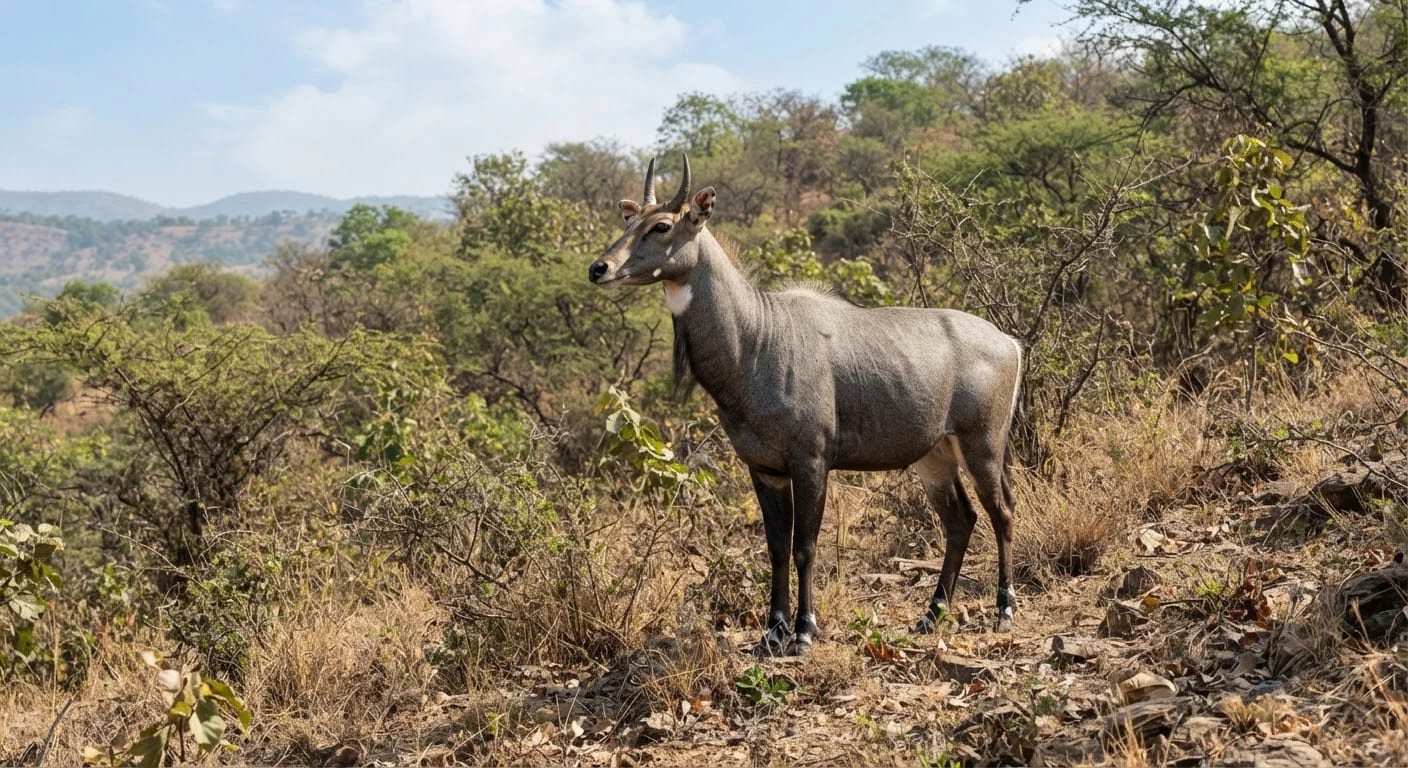
Nilgai (blue bull) in Ratapani Tiger ReserveLeast Concern (IUCN)Largest antelope

Nilgai (Blue Bull)

Boselaphus tragocamelus

Chance of sightingHigh

Open woodland, scrub and buffer areas

Early morning and late afternoon

Asia’s largest antelope, common on the drier, more open fringes of the reserve.

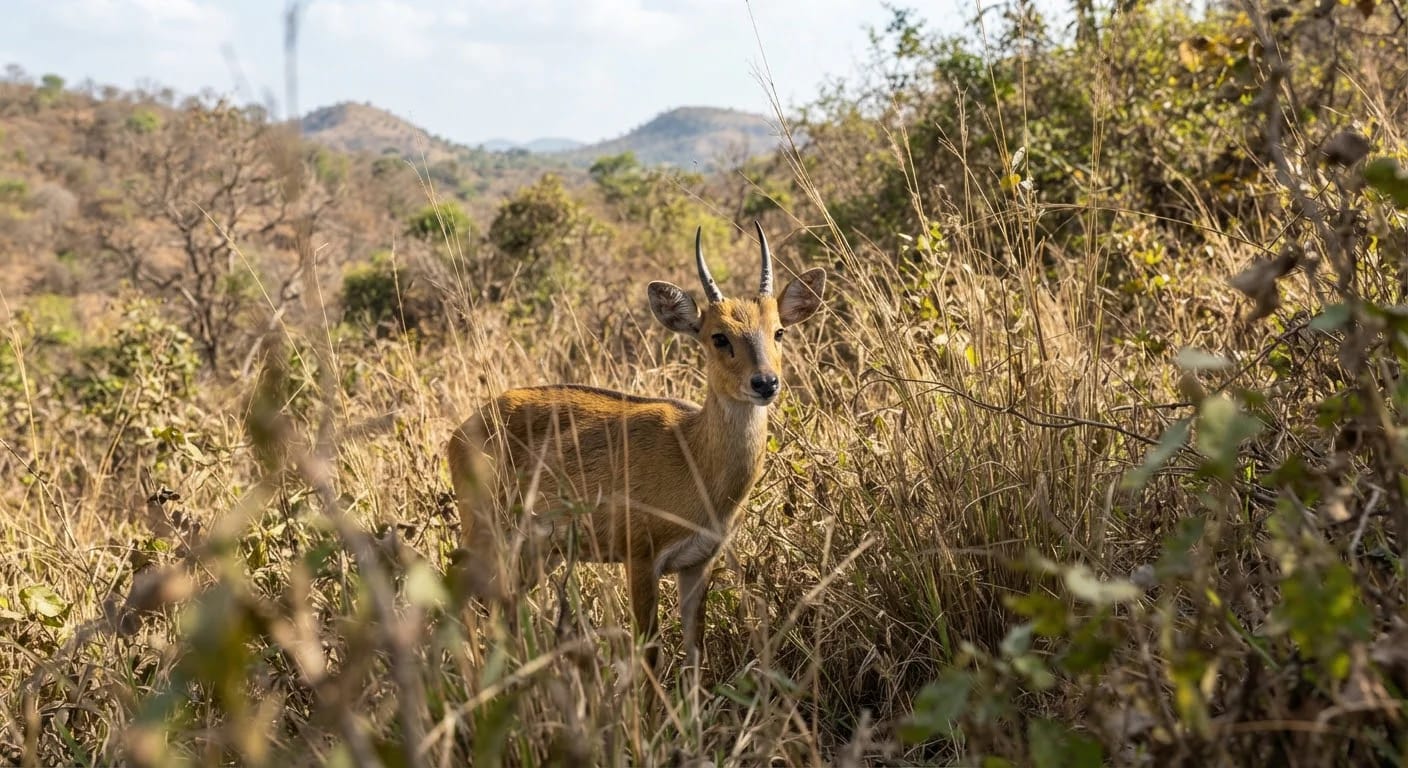
Four-horned antelope (chousingha) in RatapaniVulnerable (IUCN)Shy & rare

Four-horned Antelope

Tetracerus quadricornis

Chance of sightingRare

Hilly terrain with grass and cover

First light

The only wild mammal with four horns, found only in India and Nepal.

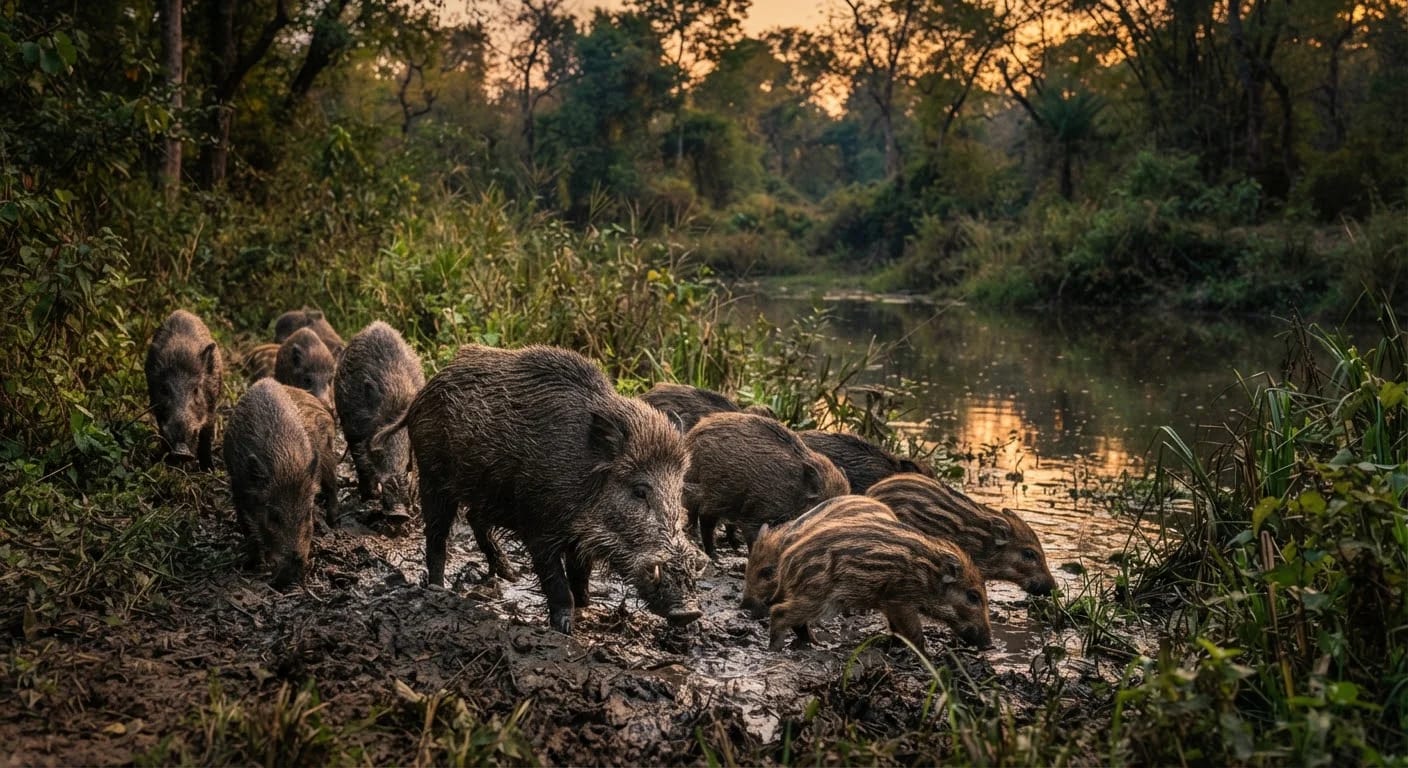
Indian wild boar in Ratapani Wildlife SanctuaryLeast Concern (IUCN)Forest digger

Indian Wild Boar

Sus scrofa cristatus

Chance of sightingGood

Moist valleys, streams and bamboo

Late afternoon into evening

Rooting boar turn over the soil, helping seeds spread through the forest.

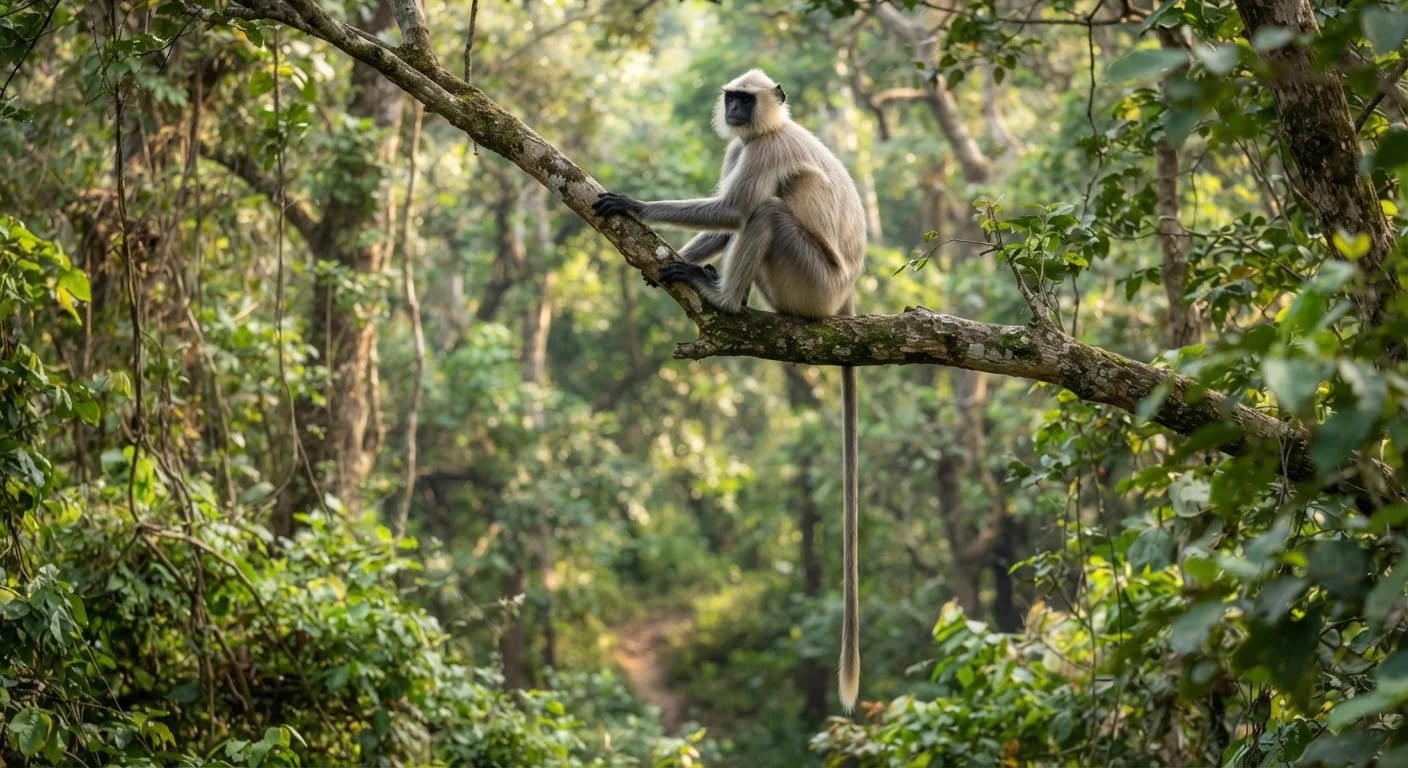
Gray langur in a teak tree, RatapaniLeast Concern (IUCN)Forest sentinel

Gray Langur

Semnopithecus entellus

Chance of sightingHigh

Tree canopy and rocky outcrops

All day

Its sharp alarm bark from the treetops is one of the best clues that a tiger or leopard is on the move.

Birds of the Vindhyas

Birds of Ratapani: 249 Recorded Species

From raptors over the teak canopy to kingfishers on the reservoirs, Ratapani is excellent for birding, especially in winter.

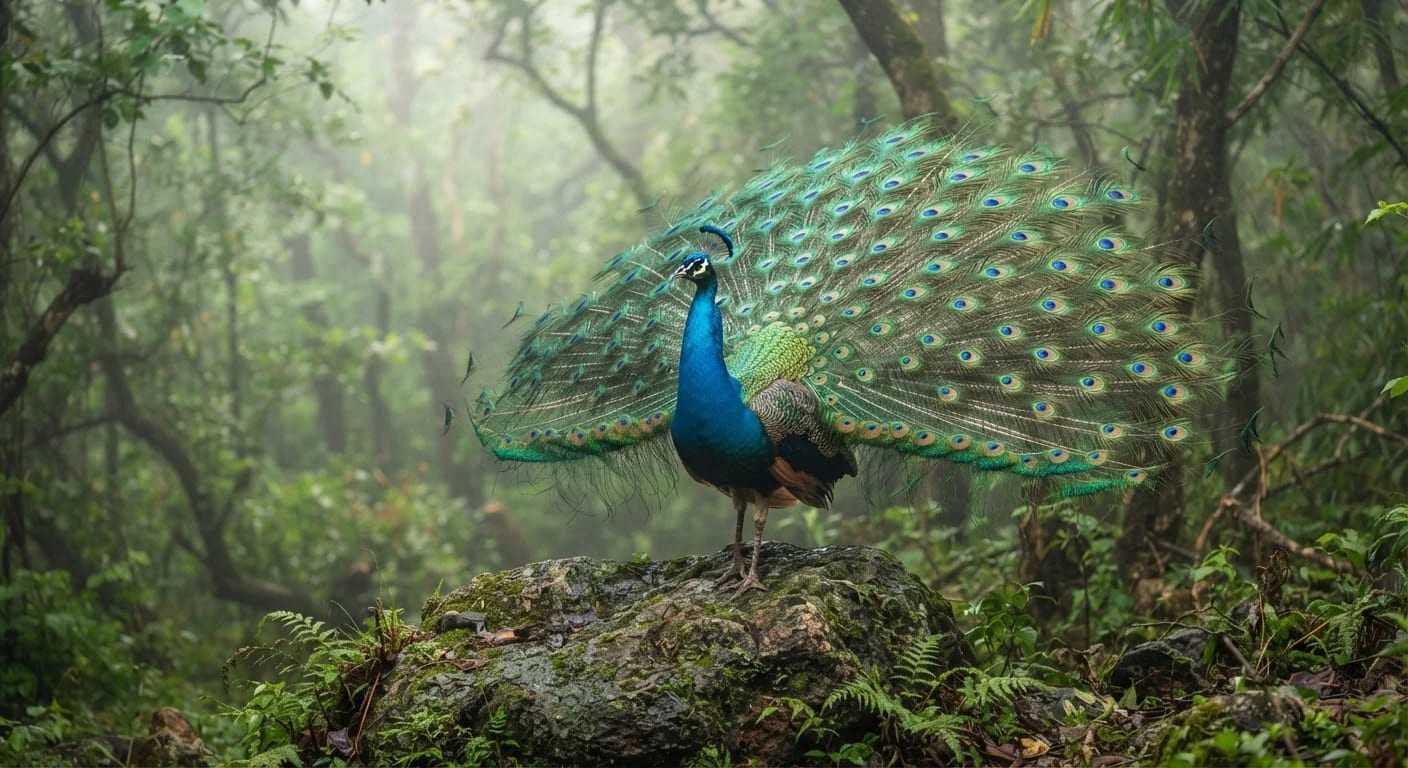
Indian peafowl, birds of Ratapani
National bird

Indian Peafowl

Pavo cristatus

Common in forest clearings; its loud calls echo at dawn.

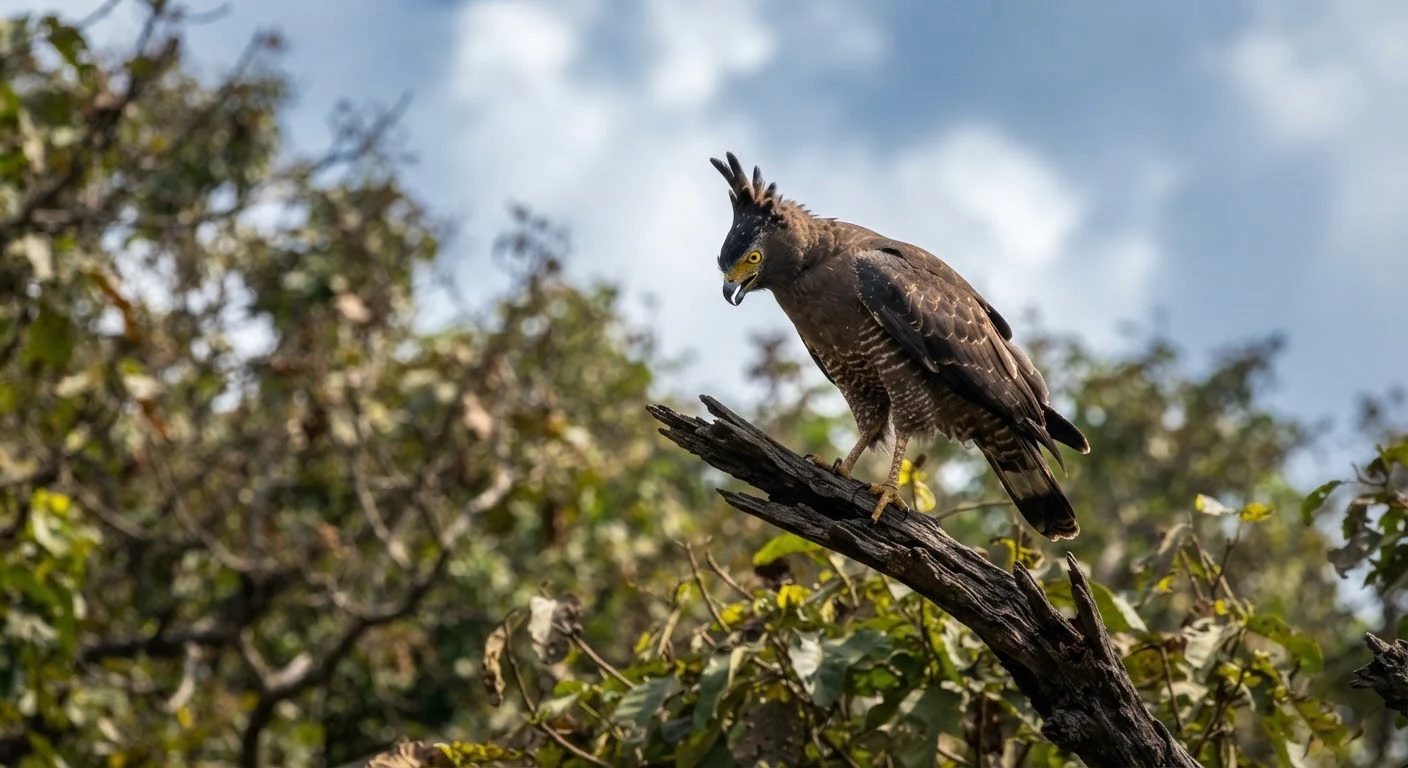
Crested serpent eagle, birds of Ratapani
Raptor

Crested Serpent Eagle

Spilornis cheela

Soars over the canopy hunting snakes and lizards.

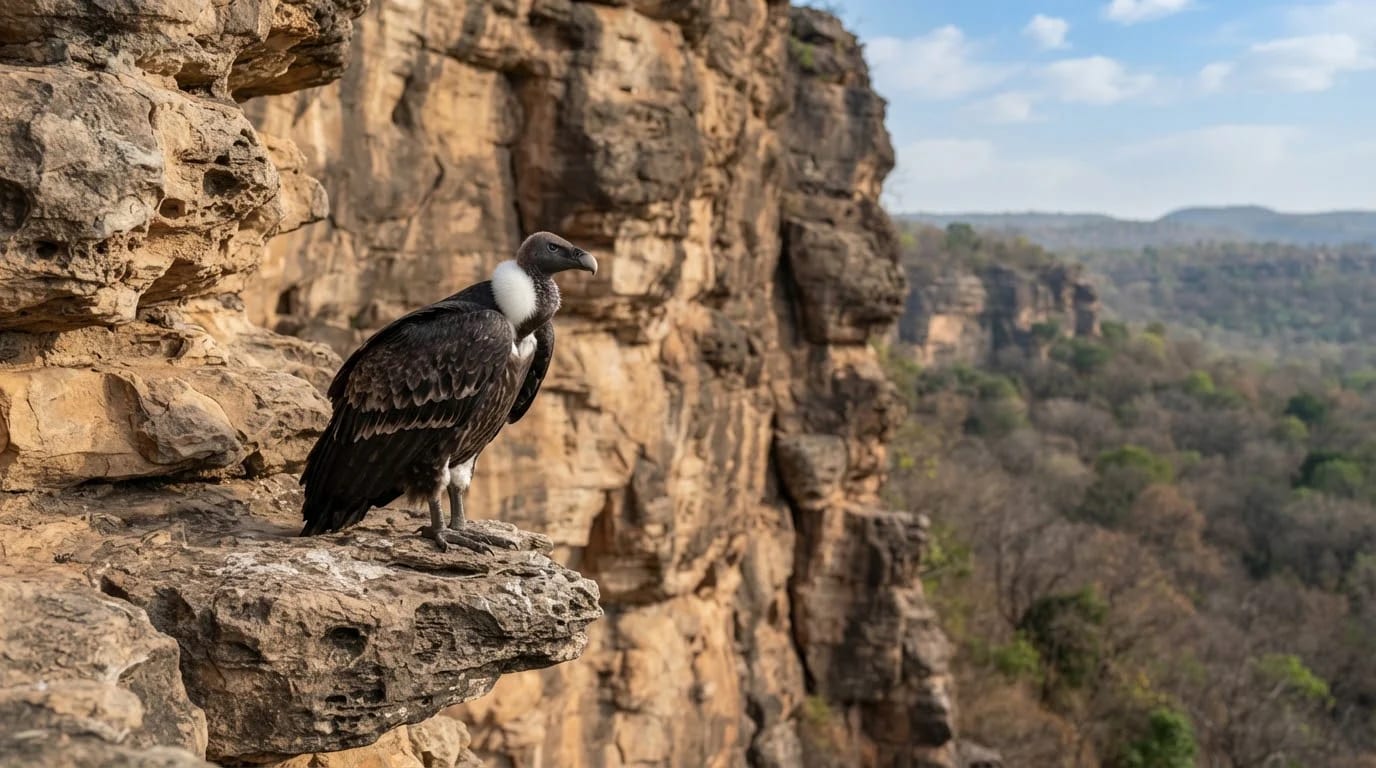
White-rumped vulture, Ratapani bird species
Critically Endangered

White-rumped Vulture

Gyps bengalensis

Recorded in Ratapani; vultures nest on tall trees and cliffs.

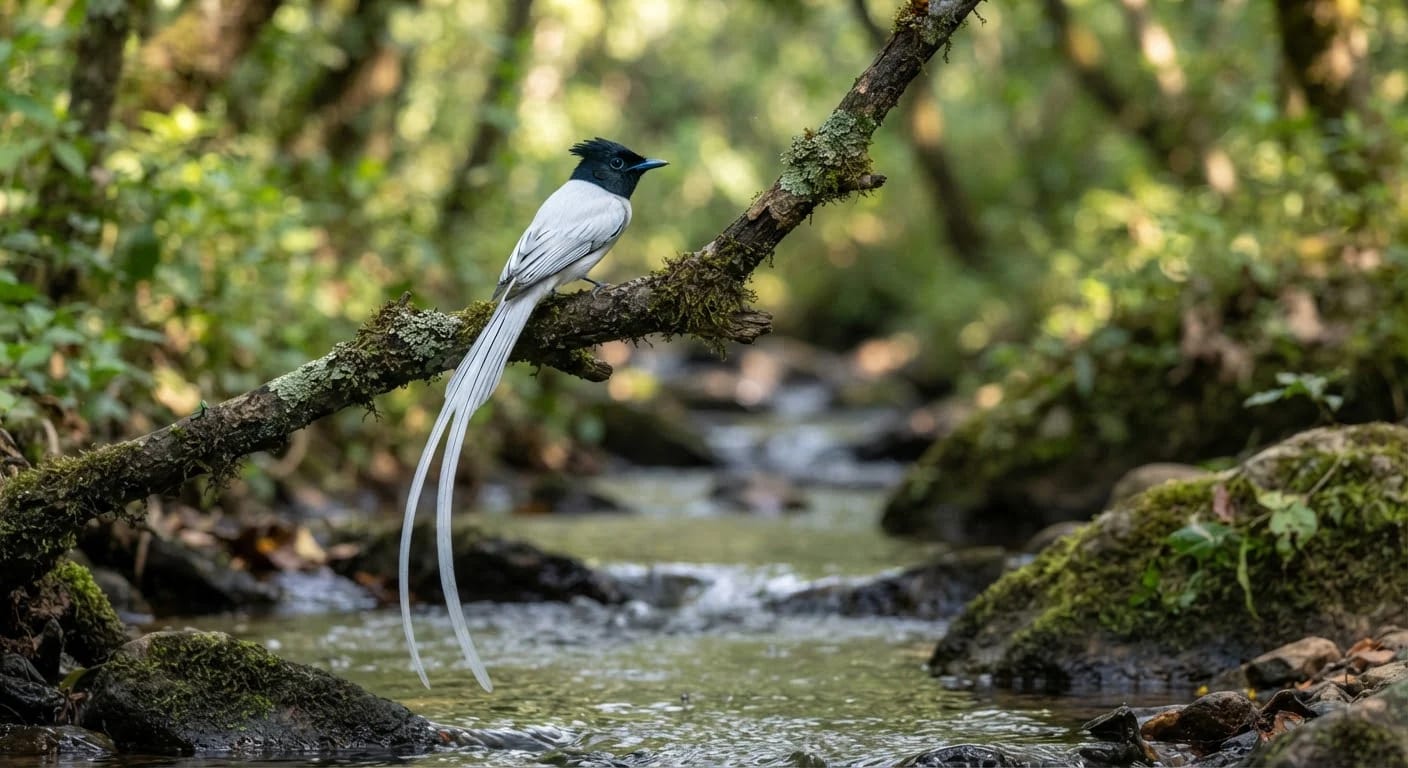
Indian paradise flycatcher, Madhya Pradesh state bird, Ratapani
State bird of MP

Indian Paradise Flycatcher

Terpsiphone paradisi

The male’s long white tail ribbons are a highlight of shady streams.

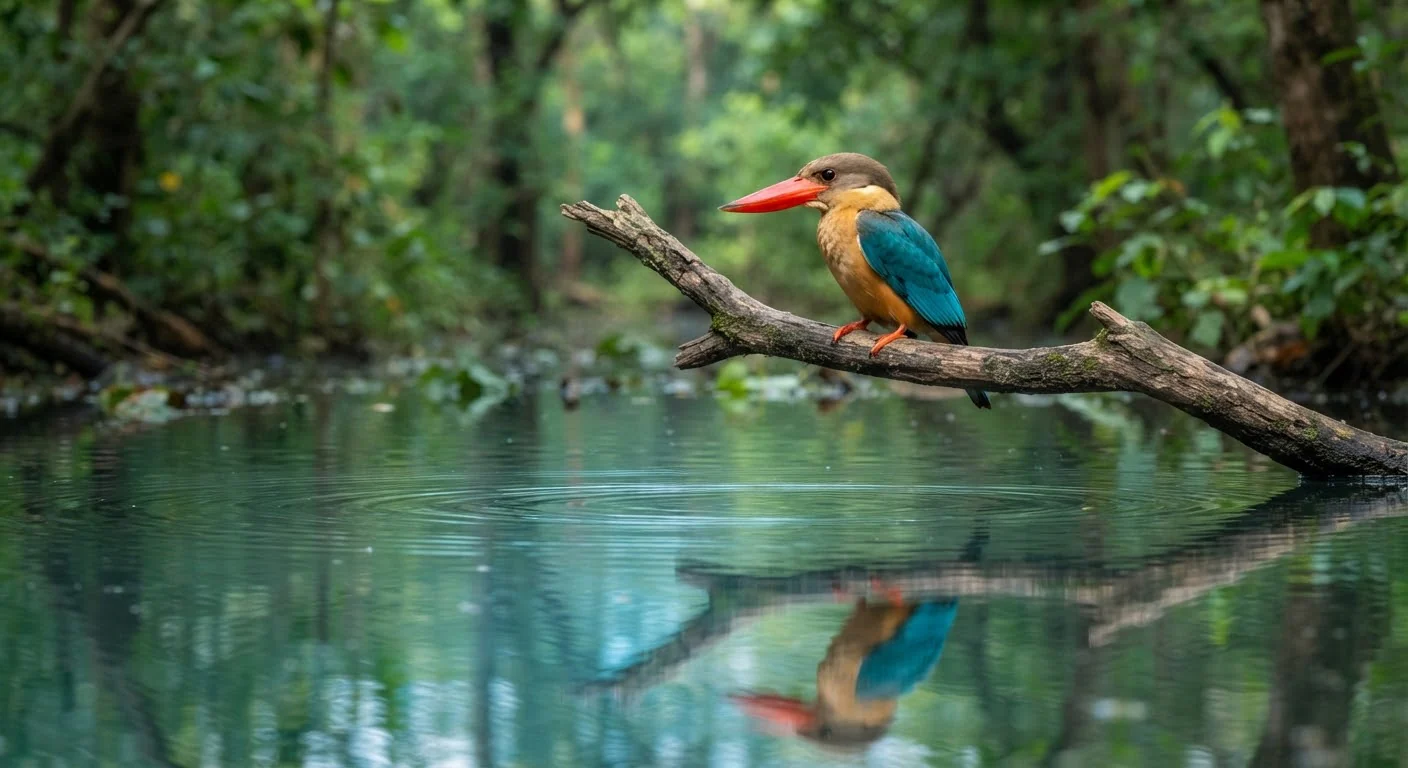
Stork-billed kingfisher, birds of Ratapani
Waterside hunter

Stork-billed Kingfisher

Pelargopsis capensis

One of several kingfishers found along forest streams and reservoirs.

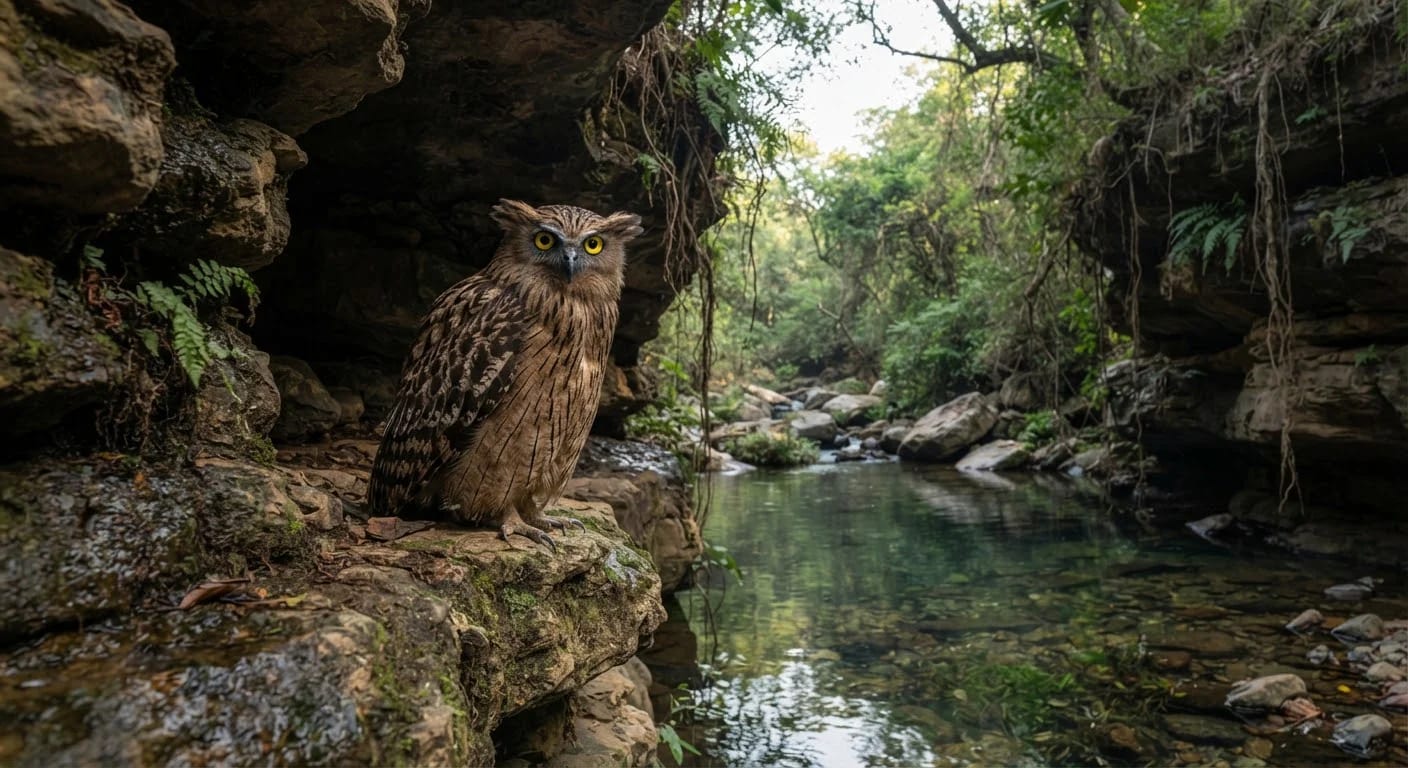
Brown fish owl, Ratapani wildlife
Nocturnal

Brown Fish Owl

Ketupa zeylonensis

Roosts in shady gorges near pools and hunts fish at night.

Field craft

How to Spot Wildlife in Ratapani

Listen for alarm calls

A langur’s sharp bark from the trees or a chital’s shrill whistle often means a tiger or leopard is moving nearby. Ask your driver to stop and wait.

Read the tracks

Fresh pugmarks, scrapes and scat on the morning tracks show which way a big cat walked overnight. Forest guides read these signs expertly.

Watch the water in summer

From April to June, wildlife gathers at the remaining pools and dams. Waiting quietly near water is often more rewarding than driving.

Look up and along the ridges

Leopards rest on rocky ledges and horizontal branches. Scan cliffs and trees, not just the track ahead.

Checklist

Ratapani Wildlife Checklist at a Glance

Species counts recorded by the Madhya Pradesh Forest Department. Carry a notebook or app and tick off what you see on each safari.

A downloadable field checklist is coming soon.

35+
Mammals
249
Birds
33
Reptiles
104
Butterflies
10
Amphibians
14
Fish
Wildlife questions

Ratapani Wildlife: FAQs

Which animals can be seen in Ratapani?

Ratapani has more than 35 mammal species, including Bengal tiger, leopard, sloth bear, dhole, striped hyena, golden jackal, sambar, chital, nilgai, four-horned antelope, wild boar and gray langur, plus 249 bird species, 33 reptiles and 104 butterflies.

Can you see tigers in Ratapani?

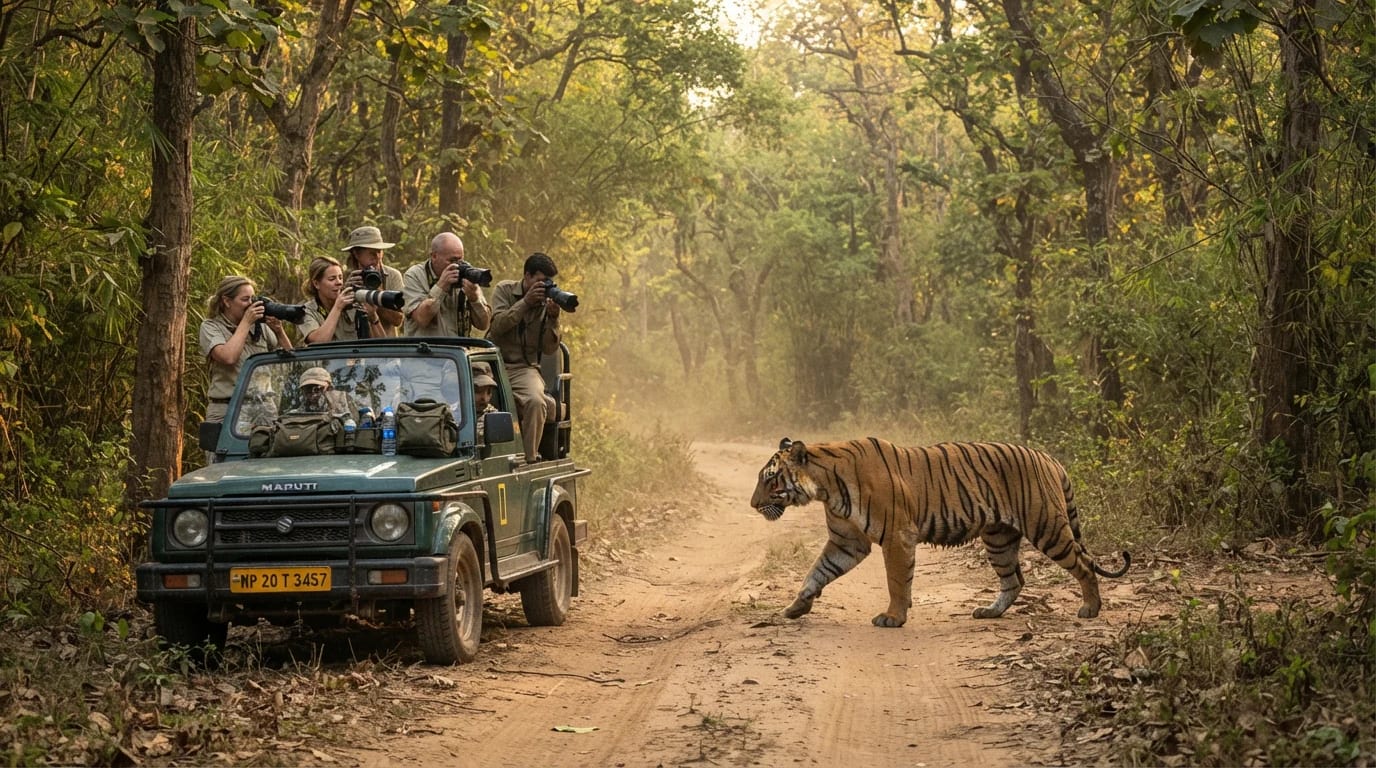
Yes, but sightings are not guaranteed. 56 tigers were recorded in the 2022 census across a large forest. Your best chance is on early-morning rounds from March to June, when animals gather near water.

Are leopards common in Ratapani?

Leopards live throughout Ratapani, favouring rocky ridges, gorges and boulder country where tigers are less dominant. They are seen most often at dawn and dusk.

Can you see sloth bears on a daytime safari?

Yes. Sloth bears are among the most frequently seen large mammals in Ratapani, especially in the early morning and in spring when they feed on fallen mahua flowers and termite mounds.

How many bird species are found in Ratapani?

The Madhya Pradesh Forest Department records 249 bird species in Ratapani, including the Indian peafowl, crested serpent eagle, Indian paradise flycatcher, kingfishers and the critically endangered white-rumped vulture.

Are walking safaris allowed in Ratapani?

No. Safaris inside the reserve are done in vehicles on set routes with a forest guide; visitors must not get down in the forest except at designated points.
Continue exploring

Sources for this Ratapani guide

Safari fees, quotas and timings are set by the Madhya Pradesh Forest Department and can change. Always confirm on the official booking portal before you travel.

Into the field

See Ratapani Wildlife on a Tiger Safari

Pick your gate and season, then book a morning round for the best chance of sightings.