A cradle of human creativity
Paintings span the Palaeolithic, Mesolithic, Chalcolithic, early historic and medieval periods, mostly in red and white natural pigments.
Thousands of years of art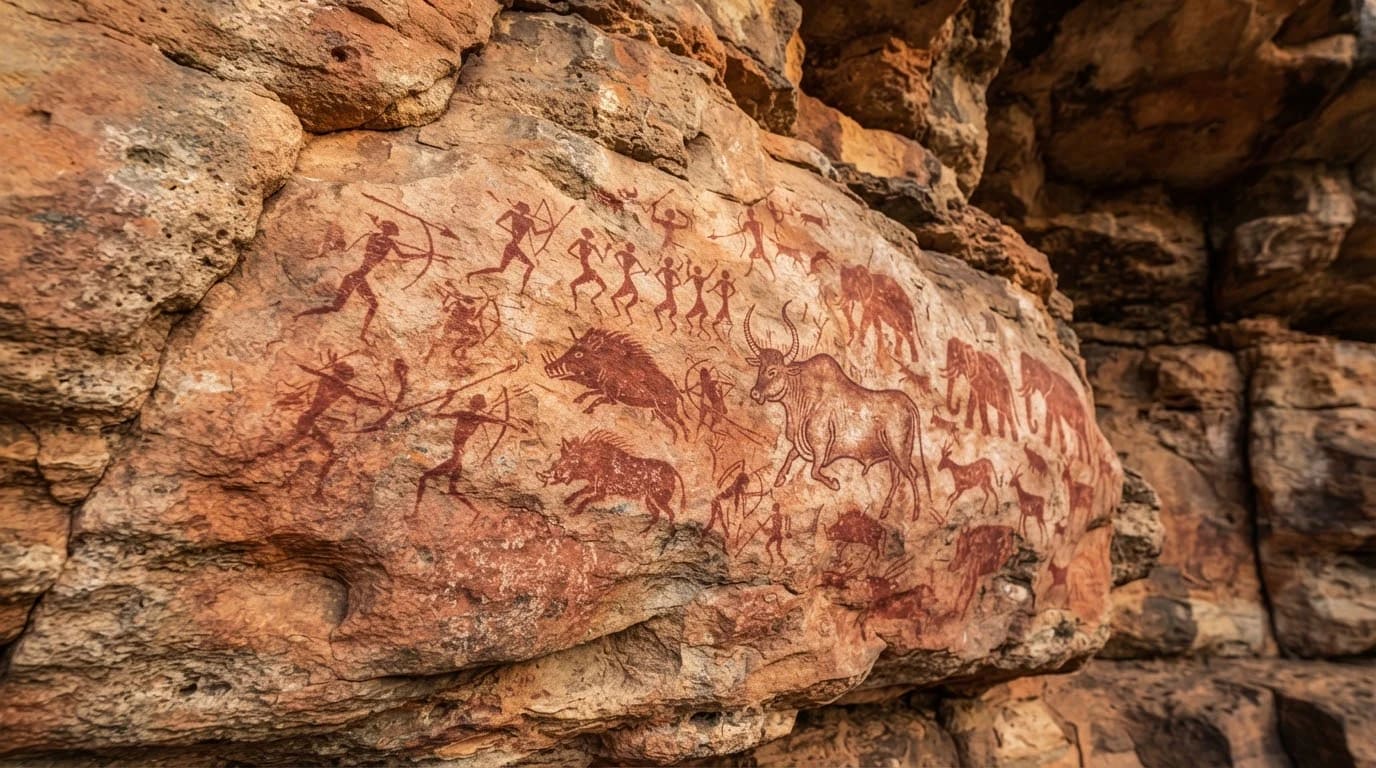
UNESCO World Heritage Site · Criteria (iii) & (v)
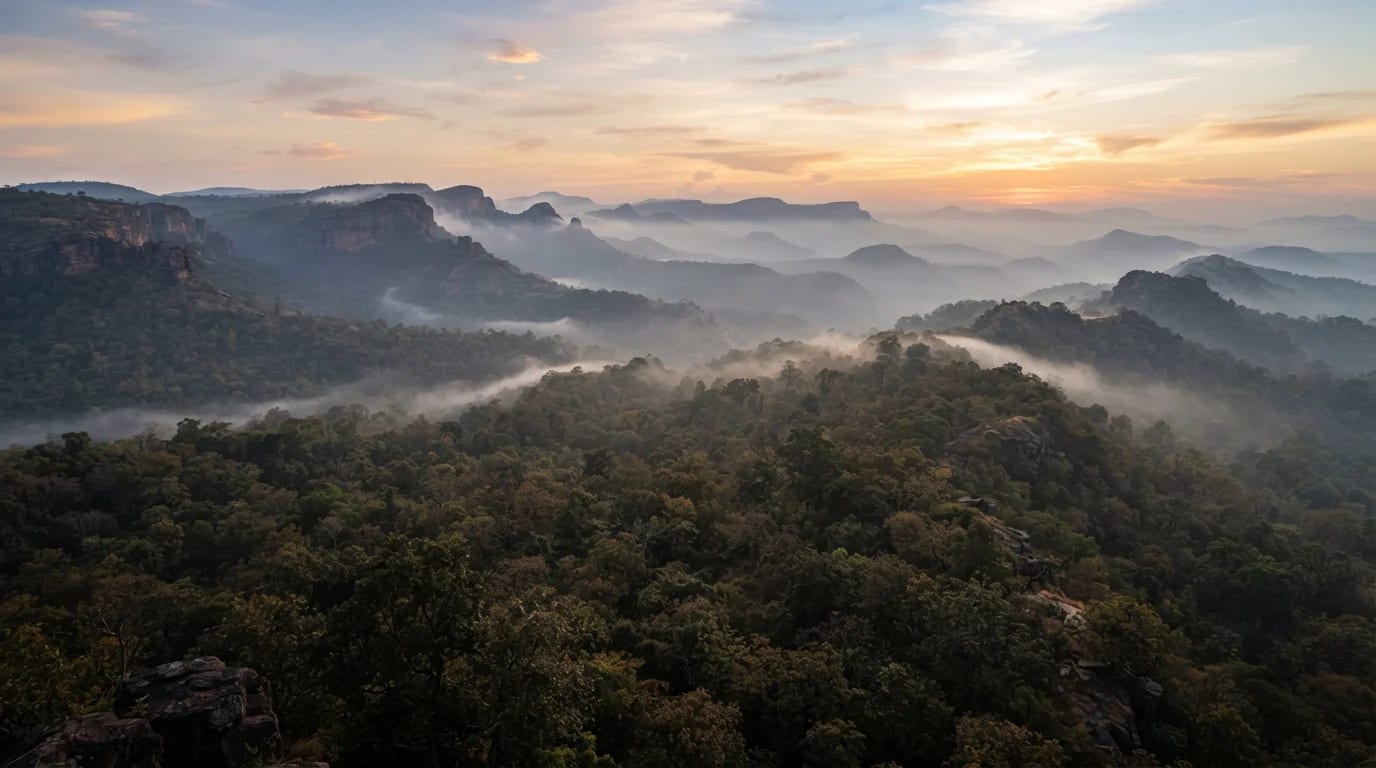
Inside the teak forests of Ratapani lies one of the world’s longest records of human life: more than 750 sandstone shelters where people lived for over 100,000 years and painted hunters, dancers and animals on the rock.
Paintings span the Palaeolithic, Mesolithic, Chalcolithic, early historic and medieval periods, mostly in red and white natural pigments.
Thousands of years of artThe shelters sit within Ratapani Wildlife Sanctuary, now a tiger reserve, so prehistoric art and living wildlife share one landscape.
Living landscapeIn 1957 archaeologist V. S. Wakankar noticed the rock formations from a train window and set out to explore them.
Rediscovered 1957UNESCO notes that traditions in nearby villages echo themes seen in the paintings, linking past and present.
Cultural continuityWorld Heritage list · Ref. 925
The Rock Shelters of Bhimbetka were inscribed in 2003 for their long, continuous record of human life and the close interaction between people and the landscape.
Criterion (iii)
Testimony to a cultural tradition, shown through rock art spanning many thousands of years.
Criterion (v)
A link between hunter-gatherer life and the landscape, echoed in the traditions of surrounding villages.
Visitor conservation rules
Age
100,000+ years
Human presence from the Stone Age (Acheulean) to around the 2nd century BCE; painting into the medieval era.
Shelters
750+ across 7 hills
Spread over about 10 km; the Bhimbetka group has 243 shelters and nearby Lakha Juar 178.
Rediscovered by
V. S. Wakankar, 1957
The archaeologist who first recognised the site’s prehistoric significance.
Distance
≈ 45 km from Bhopal
South-east on NH-46, about 9 km beyond Obaidullaganj.
Timings
About 7 am – 6 pm
Open every day, all year, including the monsoon.
Entry
Nominal ASI fee
Lower for Indian citizens, higher for foreigners; vehicle charges extra. Check at the counter.
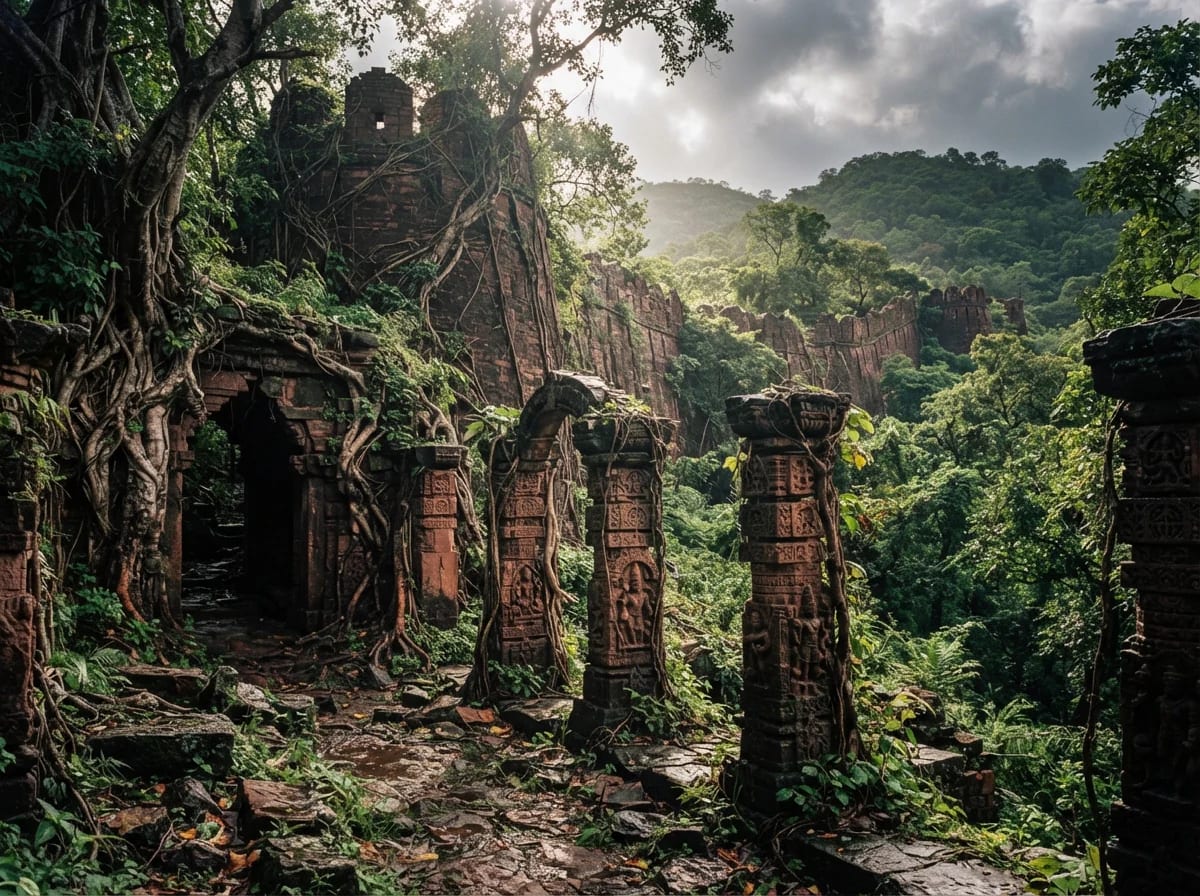
In 1957 the archaeologist Vishnu Shridhar Wakankar was travelling by train through the Vindhya hills south of Bhopal when he noticed unusual rock formations rising above the forest. He returned to explore them and found shelter after shelter painted with animals, hunters and dancers.
The site had been noted once before, in 1888, when the British official W. Kincaid described it as a Buddhist site based on local accounts. Wakankar’s work showed its true age. Excavations in the 1970s revealed stone tools and deposits reaching back more than 100,000 years, and in 2003 UNESCO added the Rock Shelters of Bhimbetka to the World Heritage List.
Coordinates ≈ 22°56′N, 77°37′E
Tap any image to enlarge it and read more about what it shows.
The paintings record everyday life, belief and the animals people lived alongside.
Hunters with bows and arrows, barbed spears and sticks chase or trap animals, sometimes in groups.
Weapons · tactics
Lines and circles of dancers, with drums and other instruments, suggest celebration and ritual.
Ritual · community
Bison, deer, antelope, boar, rhinoceros, elephants, big cats, sloth bears and birds appear across the shelters.
Animals · environment
Mothers and children, food gathering, burials and later riders, warriors and battles.
People · society
| Period | Era | Typical subjects & style |
|---|---|---|
| I | Upper Palaeolithic | Linear figures of large animals such as bison, tigers and rhinoceros. |
| II | Mesolithic | The richest phase: small human figures hunting, dancing and gathering, with many animals. |
| III | Chalcolithic | Scenes suggesting contact with farming communities of the Malwa plains. |
| IV – V | Early historic | Riders, warriors and religious symbols in red, white and yellow. |
| VI – VII | Medieval | Geometric, more schematic designs. |
Periods as described by archaeologists studying Bhimbetka; exact dates for each phase are debated.
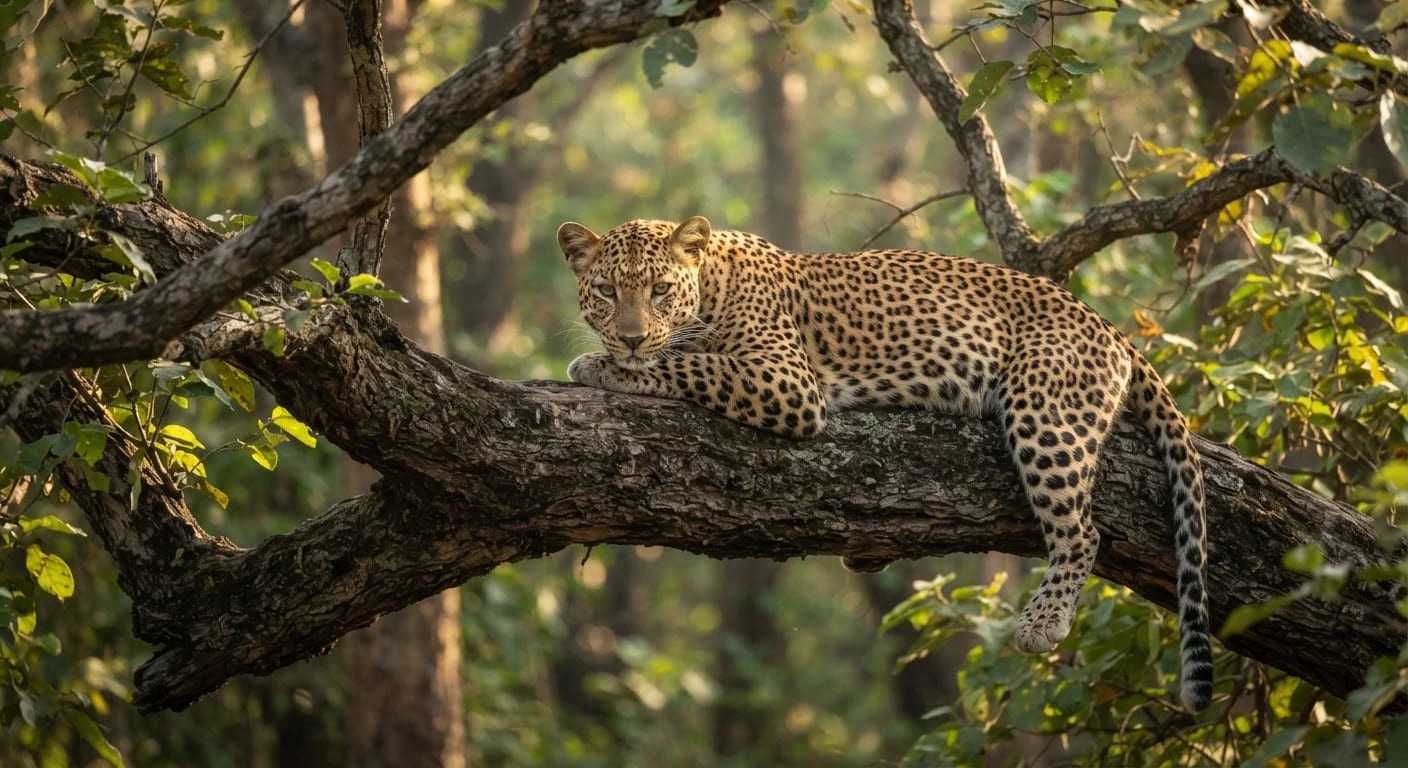
The ravines and waterholes that sustained Stone Age people still sustain tigers, leopards, sloth bears and hundreds of bird species today.
A one-day heritage + wildlife plan
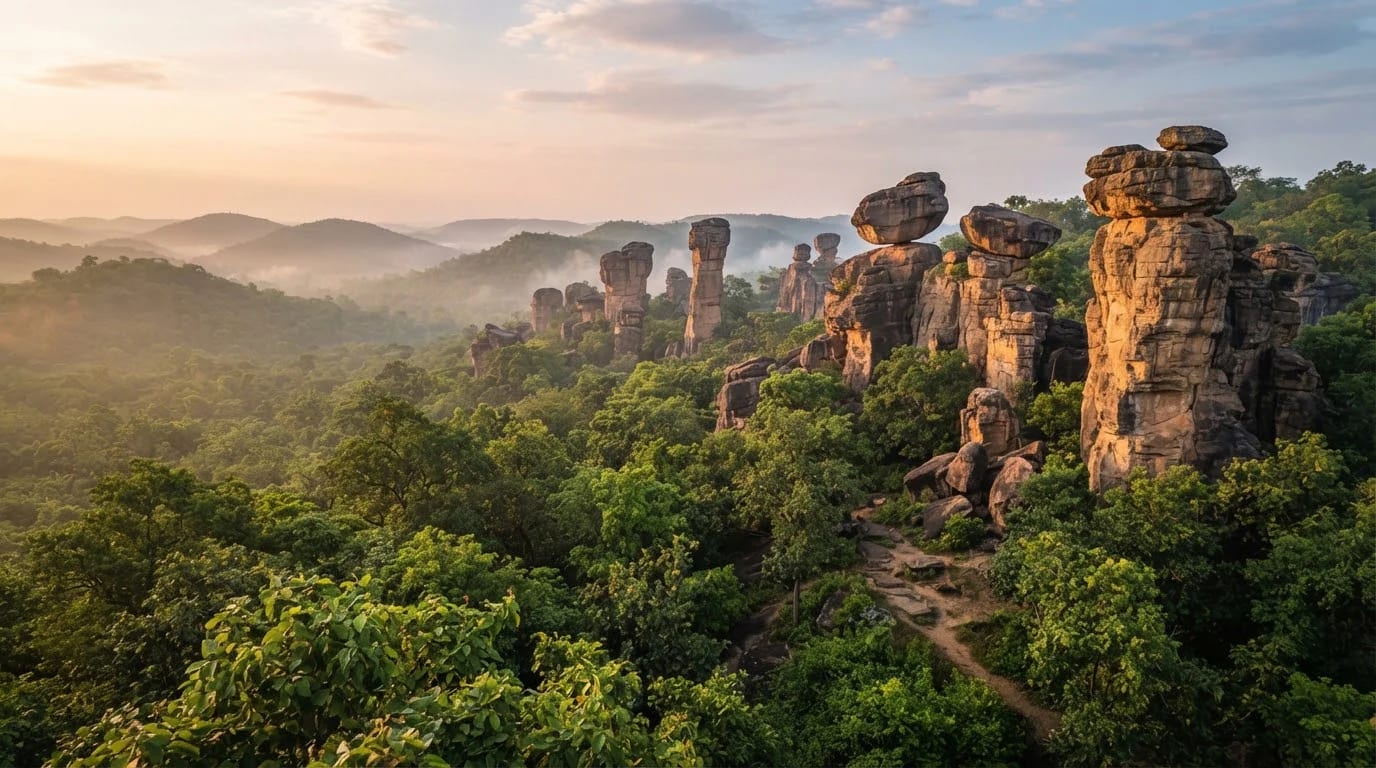
The Bhimbetka safari gate sits beside the rock shelters.
Mornings are cooler and quieter; around midday the overhangs are evenly lit and shaded.
The trail has uneven rock steps and some climbs. Carry water.
Local guides at the entrance help you find and understand the paintings.
Avoid single-use plastic, keep noise low and carry all litter back.
Safari fees, quotas and timings are set by the Madhya Pradesh Forest Department and can change. Always confirm on the official booking portal before you travel.
Plan a safari through Ratapani’s gates and explore more sights across the Vindhyan landscape.